About us
The National Association of Women and the Law (NAWL) is dedicated to advancing substantive equality for all women in Canada through law reform, particularly at the federal level. Since our founding in 1974, we have had a major role in achieving significant milestones for women’s rights. Our advocacy has impacted numerous laws and policies across the country.
National Association of Women and the Law
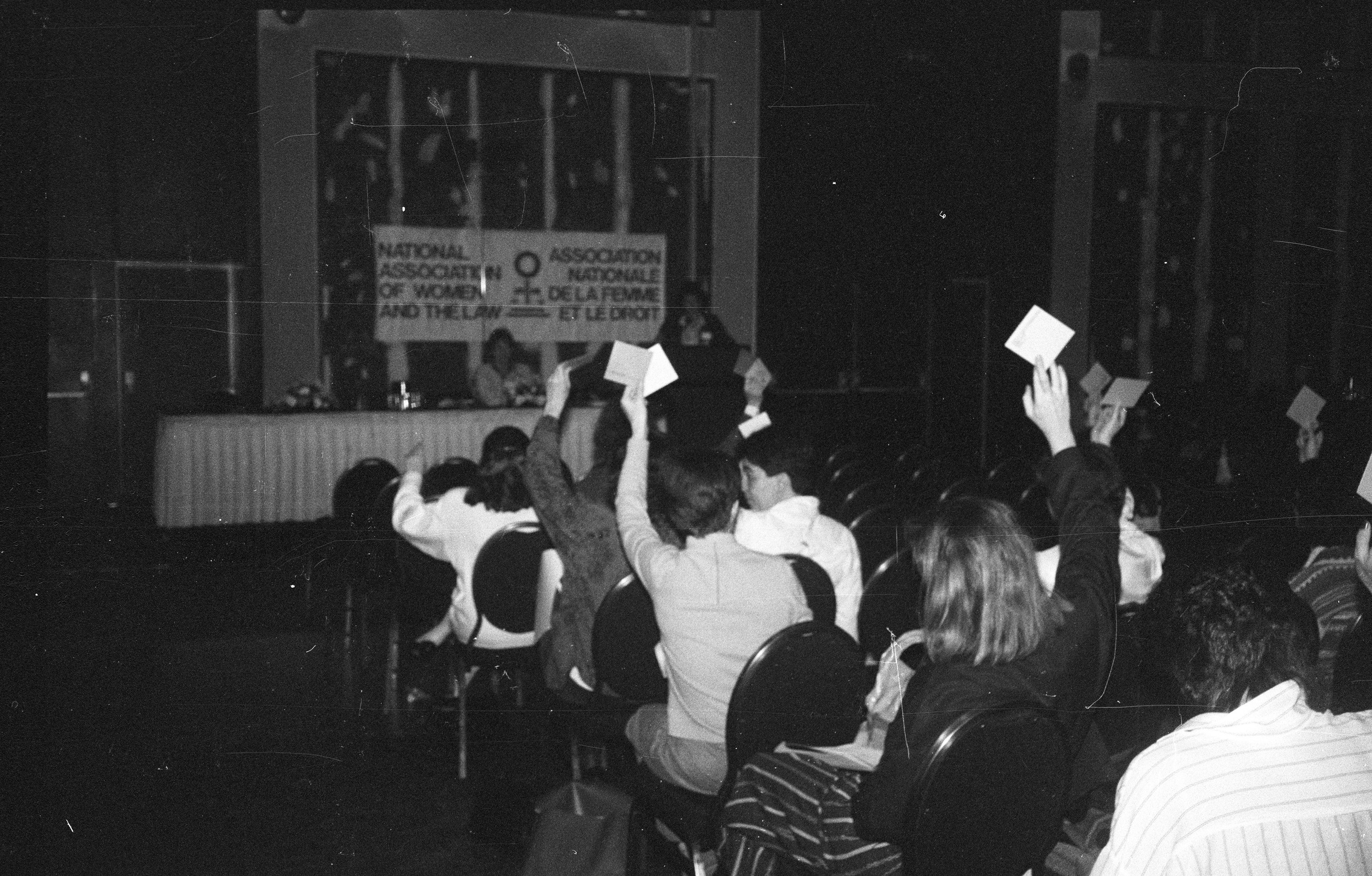
Since our founding at a conference held at the University of Windsor law school in 1974, the National Association of Women and the Law (NAWL) has worked on its own and in collaboration with others to advance feminist law reform in Canada. We’re proud to have had a major role in achieving significant milestones for Canadian women’s equality, and for our feminist legal analysis and advocacy to have impacted countless laws and policies across the country — most notably in relation to the Canadian Human Rights Act and Sections 15 and 28 of the Canadian Charter of Rights and Freedoms.
Today, we continue to write briefs and discussions papers and appear before Parliamentary and Senate committees, and meet with decision makers to influence the law making process on current and emerging feminist law reform priorities. Working with feminist lawyers, students, service providers, academics, activists and allies, we are (re)building a feminist law reform network and increasing the capacities of women to engage in the law making process.

NAWL's Mission
NAWL's Vision
NAWL'S Values
We address and challenge all forms of oppression that affect women in intersecting, compounding and distinct ways. These systems of oppression take many forms, including patriarchy, gender norms, white supremacy, xenophobia, ableism, ageism,
homophobia, transphobia, classism, and colonialism.
Our History


Our Team

Tiffany Butler

Suzanne Zaccour

Thaïs Laborde

Amanda Therrien

Misha Munim

Chelsea Giesel

Forest Malin

Alice Méthot

Carly Reichelt

Fowziya Ali

Spencer C. Nault
Team Bios
Tiffany Butler (she/her) is the Executive Director of NAWL. In this role, Tiffany leads and manages all aspects of NAWL’s operations. Prior to joining NAWL, Tiffany led the Canadian Bar Association’s (CBA) Young Lawyers International Program (YLIP) supporting young lawyers from across Canada to gain international professional experience in climate justice, gender equality, human rights and law reform work. Prior to this, Tiffany managed a broad range of access to justice programs, including the University of Calgary’s Pro Bono Students Canada chapter and Calgary Legal Guidance’s Domestic Violence Legal Intervention Program providing survivor-centred legal services to women fleeing intimate partner and family violence. She began her legal career practicing law in specialized community and legal aid clinics providing trauma-informed legal representation to marginalized and vulnerable populations, primarily in the areas of violence against women and youth criminal defence.
Prior to her law career, Tiffany co-founded a snowboarding and skateboarding events production company dedicated to the inclusion and progression of women and girls in those sports. Tiffany has also contributed to the community through her volunteer work with Calgary’s gender-inclusive 100% Skate Club, as a volunteer board member with the Alberta River Surfing Association and currently as a volunteer board member with Les Amis de la Forêt-la-Blanche Ecological Reserve.
Tiffany obtained her law degree from the University of Calgary (2011) and a degree in Public Affairs and Policy Management specializing in Human Rights from Carleton University (2009). She was called to the Alberta Bar in 2012 and the Ontario Bar in 2018. Fluent in English and French, Tiffany has lived and studied across Canada, in Europe, and in Southeast Asia. Tiffany is an avid board sports enthusiast and recently picked up gardening which she enjoys doing with the help of her dog, Katka.
Chelsea Giesel (she/her) is passionate about building strong connections between people and the land through growing, foraging and sharing both food and stories. Chelsea holds a Bachelor of Public Affairs and Policy Management, specializing in International Studies from Carleton University and has spent 5 years in health program delivery, research and advocacy for a National indigenous women’s organization.
Chelsea's career has spanned reforestation, finance, program delivery and indigenous health–which have all shaped her intersectional approach to decolonizing institutions for the economic, health and socio-political participation and equality of women and gender diverse people. Chelsea believes in the ability of feminist law reform to lead to improvements in the social determinants of health and wellbeing for indigenous and marginalized people, and is excited to contribute to this aim as the new Project Manager for NAWL.
Spencer (they/them) has a MA in linguistics, and studies law at the Université du Québec à Montréal (2022-2025). They have worked as a court interpreter with the Quebec Department of Justice since May 2023. Their fields of interest include legal linguisitics, economic and social rights, and criminal law.
Spencer also loves cinema, literature and cycling.
Our National Steering Committee
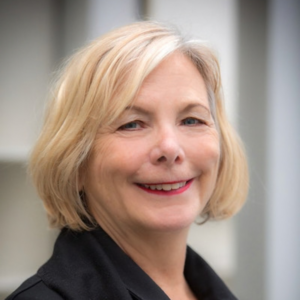
Dr. Susan Bazilli is a globally recognized international human rights lawyer, gender justice advocate, and thought leader in feminist legal reform. With over four decades of experience working in more than 50 countries, she brings expertise on feminist advocacy, gender equality, violence against women, climate justice, constitutional law, and women, peace and security.
She is the Director of the International Women’s Rights Project (IWRP) and currently serves as an Independent Human Rights Expert for the United Nations Human Rights Council. Throughout her career, Dr. Bazilli has worked with governments, civil society, and international institutions such as the United Nations Development Programme (UNDP), UN Women, the Global Environment Facility, and the Commonwealth Secretariat.
She was the Legal Director at METRAC (Toronto 1991-1997); Executive Director of the California Alliance Against Domestic Violence (1997-1998); and has worked with the IWRP since 2003.
Her work spans supporting grassroots women’s movements in Africa and Asia to advising on water governance and environmental justice. She has played pivotal roles in constitutional reform processes, gender mainstreaming in post-conflict reconstruction, and the global implementation of the Convention on the Elimination of All Forms of Discrimination against Women (CEDAW) and the Beijing Platform for Action.
Dr. Bazilli is the producer of the documentary “Constitute!”, which explores women's constitutional activism across Canada, South Africa, and Afghanistan, as well as the editor of “Putting Women on the Agenda: Women and the Constitution in South Africa”, compiled during her work at Lawyers for Human Rights. A frequent keynote speaker and guest lecturer, she has taught international human rights law in North America, Europe, Asia, and Australia, and held appointments at Osgoode Hall Law School, UBC, CUNY, and the University of Victoria.
A fierce advocate and visionary strategist, she is known for working in coalition to disrupt patriarchal systems while building pathways for feminist transformation across law, policy, and practice.
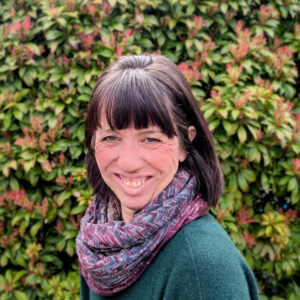
Anna brings over 15 years of progressive feminist leadership experience at leading humanitarian and development organizations, including work focused on gender equality, access to justice, policy development, strategic planning, and evaluation, in the process contributing to projects throughout East Africa and South Asia. Anna has completed an MA in International Development Studies from Dalhousie University and a JD from the University of Ottawa. Her blend of legal and international experiences provides her with a unique understanding of how legal frameworks can both perpetuate and dismantle inequality. She is dedicated to applying an intentional, intersectional lens to her work, and strongly believes in creating spaces for knowledge exchange, facilitating opportunities for evidence-based learning.
Anna is committed to community engagement, having served on governance boards, trained as a restorative justice facilitator and a peer leader for bereavement support groups, and taught yoga classes for staff at not-for-profit organizations. She also has a strong interest in issues facing newcomers to Canada, having contributed to the Refugee Sponsorship Support Program and the Canadian Association of Refugee Lawyers.
Born and raised in British Columbia’s Okanagan Valley, she recently returned “home”. When she is away from work and community involvement, Anna is most comfortable with dusty hikes, creative baking days, immersive reading experiences, camping trips, and deep conversations framed by feminist principles.

Lise Gotell is the Landrex Distinguished Professor in Women’s and Gender Studies at the University of Alberta where she has taught for the past 25 years. She completed her PhD in Political Science at York University in 1993, after which she held a Social Sciences and Humanities Postdoctoral Award at the Institute for Feminist Legal Studies. Lise is an internationally recognized expert on sexual consent law. She is currently engaged in research projects examining the rise of the rough sex defence and developing strategies to address the sexual assault justice gap for Alberta survivors. Lise has also held a number of academic leadership positions, including Chair of Women’s and Gender Studies, and Vice-Dean and Acting Dean of Arts.
Strongly committed to feminist activism and to the project of feminist law reform, the focus of her academic research and advocacy has been to help shape policy and awareness around violence against women. Her work has been cited by the Supreme Court of Canada, as well as in law reform initiatives here and in other countries. Lise served on the Board of the Women’s Legal Education and Action Fund and acted as National Chair between 2016-18, during which time she also contributed to numerous cases committees. Currently, she serves on the Advisory Committee of Courage to Act, helping to develop national strategies to combat campus sexual violence. In 2021, the University of Alberta recognized her public engagement through a Community Scholar Award.
 Elizabeth Johannson has a B.A. (Hons.) in Theatre and Drama and is a Chartered Professional Accountant (CPA, CGA). This enables her to effortlessly dance between her left brain and right brain in analyzing and navigating the world. She is currently working as a full-time accountant and pursuing part-time graduate studies at the University of Alberta in Gender and Social Justice Studies.
Elizabeth is a passionate advocate for workers rights and spent 6 years as President of the Non-Academic Staff Association (NASA) at the University of Alberta. During her tenure she spearheaded a successful campaign for her union to affiliate with the Alberta Federation of Labour (AFL). Subsequent to affiliation she served on the Executive Council of the AFL. While President of NASA she established a standing committee on Equity, Diversity, and Inclusion (EDI) and a permanent EDI focused seat on the NASA Executive Board. She also coordinated the University-wide commemoration of the National Day of Remembrance and Action on Violence Against Women for multiple years. Other experience serving on boards includes serving on the Steering Committee of the Feminist Alliance for International Action (FAFIA) and 3 years as Vice-Chair of the Alberta Public Service Pension Plan.
 Jennifer Khor (she/her) is supervising lawyer and project manager for Community Legal Assistance Society (CLAS)’s SHARP Workplaces Legal Advice Clinic providing legal advice to complainant’s of workplace sexual harassment and CLAS’s legal advice service for persons who have been sexually assaulted in BC. She is committed to ensuring that these legal services are delivered with a holistic trauma-informed approach. Jennifer regularly develops and delivers education and training. Jennifer also leads CLAS’s campaign against the misuse of non-disclosure agreements (NDAs) in silencing and perpetuating trauma on complainants, and is a member of the Uniform Law Conference of Canada’s working group on NDAs.
Jennifer has dedicated her career to access to justice, human rights, and equality issues. She graduated from Mount Allison University with a Bachelor of Science and Dalhousie University with a Bachelor of Laws. She was admitted to the Law Society of British Columbia in 1997. Jennifer previously worked on legal aid initiatives for Legal Aid BC, including opening child protection legal aid offices across the province. For many years, she worked internationally to improve access to justice and human rights in Africa and Asia.
Jennifer is an active volunteer in the legal profession. She has served on the Canadian Bar Association BC Branch Policy and Advocacy, Professional Issues and Equality and Diversity Committees, and the National Access to Justice sub-committee. She was board member and co-chair of the Law and Government Liaison Committee for West Coast LEAF, board member and policy committee chair for an organization that advocates for the rights of migrant workers, and board member of a community legal aid clinic in Ontario.

Kaja is a former family lawyer based in Toronto. She is currently pursuing her LLM at the University of Toronto Faculty of Law, where her research interests include family law, family violence, children's rights to be heard, and meaningful access to family justice.
Kaja obtained her J.D. from the Peter A. Allard School of Law at the University of British Columbia and was called to the bar in British Columbia in 2017 and in Ontario in 2025. She practised in Vancouver, first in civil litigation and then exclusively in family law, before pivoting to work with articling students as a supervising lawyer for Access Pro Bono BC's Everyone Legal Clinic. Most recently, she served as Program Manager at Pro Bono Students Canada, where she helped expand and manage PBSC's Family Justice Centre. In that role, she led the design and implementation of inclusive, trauma-informed family violence screening and risk assessment practices.
Throughout her career, Kaja has been a committed advocate for feminist causes and for survivors of gender-based violence. She has volunteered extensively to provide pro bono summary legal advice to women, including with Battered Women's Support Services, Rise Women's Legal Centre, and Access Pro Bono BC. She is delighted to join NAWL's National Steering Committee and to contribute to its crucial work advancing women's equality through law reform.

Elin Miller has 20 years' experience working on gender equality, international law and foreign policy, currently as Deputy Director in Canada’s G7 Presidency team in charge of the G7 Gender Equality Advisory Council. She previously led the Women, Peace and Security (WPS) policy unit at Global Affairs Canada, responsible for advancing the WPS agenda through Canada’s international engagements. Elin led the development of Canada’s second National Action Plan on WPS, Canada's WPS Awards Program, and its #PeacebyHer advocacy campaign. She was an international fellow in the Kroc Institute’s Women Peacemaker program and co-chaired Canada’s WPS Advisory Group with civil society.
Elin grew up in Sweden where she completed a B.A. in Political Science at Stockholm University and an LL.B at Lund University, before she entered Sweden's diplomatic training program. While in the Swedish Foreign Service, she did diplomatic postings to Colombia, the UN in New York, and Canada. Elin also has an LL.M. from Columbia University in New York (Harlan Fiske Stone Scholar). Her legal speciality is public international law, including international humanitarian law and human rights law. She was the host of the podcast Everyday Reconciliation and is currently co-authoring a book on reconciliation with Indigenous peoples in Canada. She has 3 children and a grandchild.
 Cheryl is the Executive Director of the David Asper Centre for Constitutional Rights, Faculty of Law, University of Toronto. She was called to the Ontario Bar in 1987 and completed her M.S.W. at University of Toronto in 1991. She practised at the legal clinic Justice for Children and Youth from 1991 to 2008 where she appeared at all levels of court and various administrative tribunals on behalf of young people. There she also led the clinic’s Charter litigation including the challenge to the corporal punishment defence in the Criminal Code [Canadian Foundation for Children, Youth and the Law v. Canada (2004)], the striking down of the reverse onus sections of the Youth Criminal Justice Act for adult sentencing [R. v. D.B. (2008)], and an intervention involving the right of a capable adolescent to consent to her own medical treatment [A.C. v. Manitoba Child and Family Services (2009)].
As Executive Director of the Asper Centre, she has represented the Centre at the Supreme Court of Canada in R. v. Conway, R v. Barton, R. v. Kokopenace and the jury vetting appeals [R v Emms, R v Davey, R v Yumnu (2012)], as well as in the Polygamy Reference case at the B.C. Supreme Court and Tanudjaja v Canada (Attorney General) at the Ontario Court of Appeal. She is the past Chair of the Ontario Bar Association, Constitutional, Civil Liberties and Human Rights Section and has served on the CBA National Constitutional and Human Rights Law and Child and Youth Law Sections executive. From 2018 to 2020 she served on the Child and Family Services Review Board and the Human Rights Tribunal of Ontario and continues to serve on the Steering Committee of the National Association of Women and the Law (NAWL). In 2019, Cheryl was awarded the Law Society Medal by the Law Society of Ontario for her contributions to the legal profession.
She teaches a Constitutional Advocacy clinic and Child and Youth Law at the Faculty of Law, University of Toronto.

Angela Ogang is a bilingual lawyer and a member of the Ontario Bar and Kenyan Bar. She was born in the Ivory Coast and attended secondary school in France where she obtained her Baccalaureate (Literature). She holds a Certificate in English Law from the London School of Economics, University of London, a Bachelor of Laws in English and French Law from the University of Essex, a French Legal Studies Diploma from the University of Strasbourg, and a Master of Laws in Corporate and Commercial Law from Queen Mary, University of London.
Angela practices at the firm of AngeLAW in downtown Toronto and works with a diverse clientele with a particular focus on wills and estates, immigration and business law, in English and French.
Angela values her community and volunteers regularly with Pro Bono Ontario’s Free Legal Advice Hotline and other organizations whose vision and ideals are aligned with hers, including Rotary International. She is also a member of the Executive of various sections of the Ontario Bar Association (OBA), including the Citizenship and Immigration Section, the Women Lawyers Forum, and the Young Lawyers Division. She is also currently serving as an elected member of the OBA Council and as a member of the Law Society of Kenya's Editorial Committee and Cross Border Practice & Immigration Committee.

Tanya Rumble is a visionary fundraising executive with nearly 15 years of experience leading high-performing teams to raise millions for institutions, including Toronto Metropolitan University, McMaster University, the Heart and Stroke Foundation, and the Canadian Cancer Society.
Named one of Canada’s Top 100 Most Powerful Women in 2023, she currently serves as Executive Director, Development (University-Wide Initiatives) at TMU. Tanya is also co-founder of Recast Philanthropy, where she challenges conventional fundraising norms through justice-centred, restorative, and ethical approaches.
A sought-after speaker, writer, and facilitator, her work has shaped national and international conversations on power, equity, and the future of philanthropy.
 Sarah Sinclair (she/her) is a member of Peguis First Nation, Treaty One, Manitoba, and was born and raised on Mohkinstis, Treaty 7. After attending law school at the University of British Columbia she was called in 2015 and spent her first 3 years as a lawyer in private practice at a boutique Aboriginal law firm. In 2019 Sarah was hired as the first lawyer for Sahwoo mohkaak tsi ma taas, the Indigenous justice program at Calgary Legal Guidance, where she is the Program Lawyer and Supervisor. Sahwoo mohkaak tsi ma taas’ mission is to effect systemic change in access to justice for Indigenous people. To that end, Sarah provides pro bono legal services to individuals who would not otherwise have access to a lawyer, and cultural education and competency training to legal professionals. Sarah’s passion is to help accelerate the use of Indigenous law in everyday practice throughout the legal profession.
Sarah is a member of the Indigenous Circle of the Alberta Human Rights Commission, the Board of Directors of the Aboriginal Friendship Centre of Calgary, and the Indigenous Advisory Committee of the Law Society of Alberta. She is an alumni of Calgary’s Top 40 Under 40 awards, 2021.
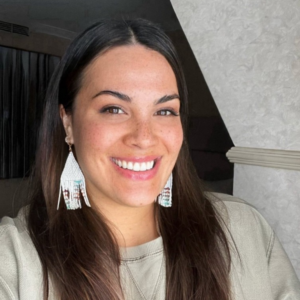
Reyna Marie Uriarte Beauregard
Reyna Marie Uriarte Beauregard is a health policy/programs expert, researcher, and advocate with over ten years of experience spanning Indigenous health, community-based research, reproductive justice, and systems change. Grounded in intersectional feminist and decolonial approaches, her work examines how power operates within institutions and how colonialism, racism, patriarchy, and other intersecting systems of oppression shape health, autonomy, and access to care.
Reyna currently works as a Community Partnerships and Programming Specialist at The Ottawa Cancer Foundation, and Clinical Research Associate with the University of Ottawa’s Faculty of Health Sciences. Her research focuses on health service pathways for Inuit and First Nations communities in northern and remote regions, examining how institutional structures and colonial systems shape health outcomes while centring Indigenous knowledge, community priorities, and self-determination. She holds a Master’s degree in Conflict Studies from Saint Paul University and a degree in History from the University of Ottawa.
Throughout her career, Reyna has led national health policy, research, advocacy, and community development initiatives, including work to advance Indigenous-led approaches to reproductive health, midwifery revitalization, and culturally grounded healthcare. She brings significant experience leading and guiding boards, advisory committees, national working groups, and cross-sector collaborative initiatives across Indigenous, healthcare, academic, and non-profit settings.

Photo of our 2019/2020 National Steering Committee — back row from left to right: Lorena Sekwan Fontaine, Susana May Yon Lee, Lisa Cirillo and Zahra Taseer; front row left to right: Martha Jackman, Naomi Telford, Anne Levesque and Cheryl Milne. Absent: Sasha Hart.
Photo of our 1991/1993 National Steering Committee — from left to right: Kerry Burke, Diane Zwicker, Ann Martin, Suki Beavers, Maeve Baird, Sue Brown, Susan Vella, Roz Currie, Sandra Sellens, Joan Brockman. Absent: Barb Janzen. Photo courtesy of the University of Ottawa Archives and Special Collections Fonds 10-036.